Natural Law
Natural law is a philosophy stating that certain rights, moral values, and responsibilities are inherent in human nature, ordained by God or reason, and independent of societal laws or customs. It posits that humans can discover these universal, unchanging rules—such as doing good and avoiding evil—through rational thought to guide moral behavior and law.
Is the Church of England a Fraud?
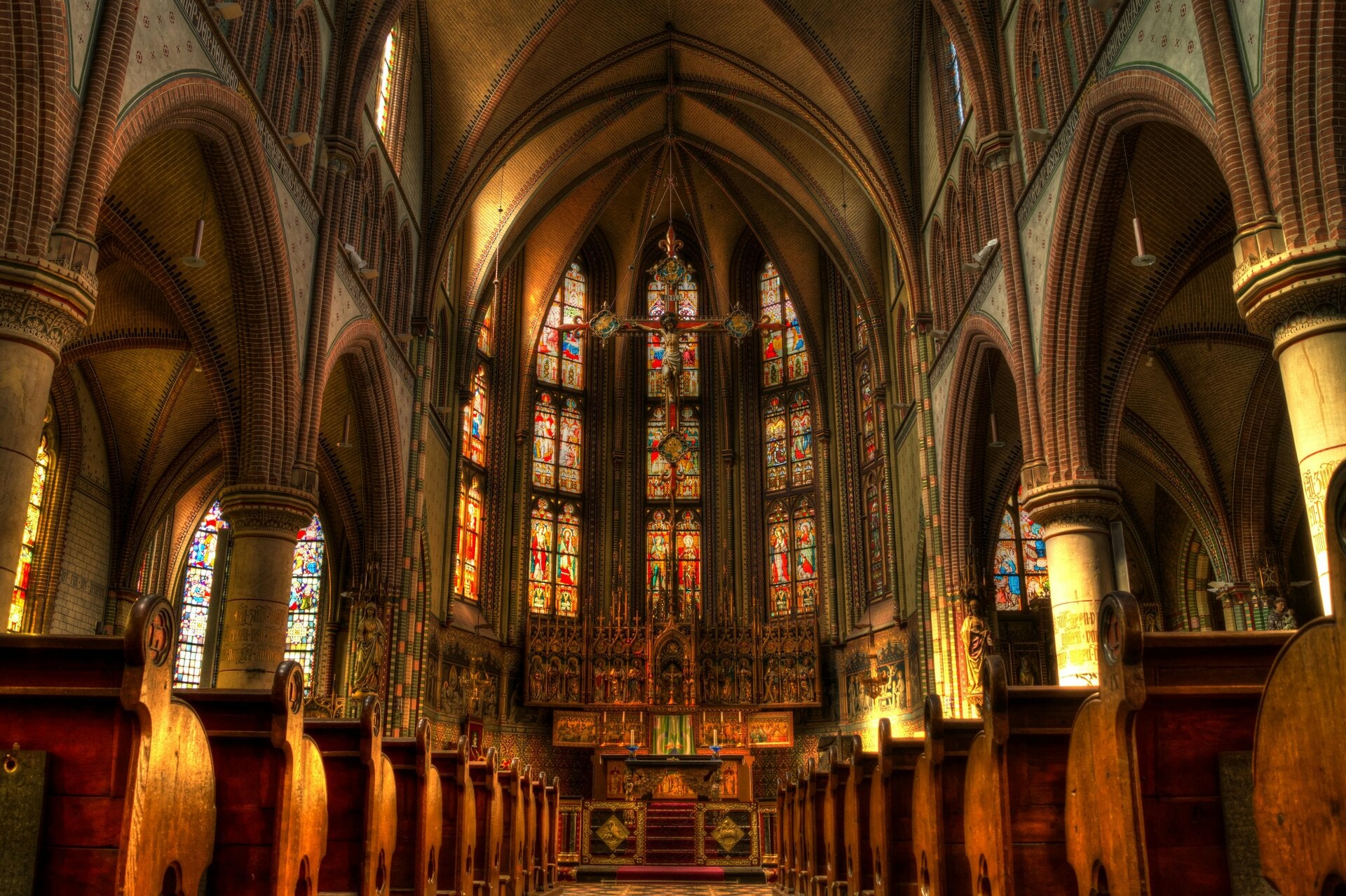
I recently had an eye-opening conversation with the London Diocese of the Church of England. I began by questioning him about whether the church follows God's law or man's law, but I received no response. A church cannot exist if it does not adhere to God's law. This lack of engagement leads me to believe that they may not be following God's law, which raises concerns about their authenticity.
Reflections on Faith and the Church of England
I am a Christian, and I find it concerning that the Church of England struggles to clearly affirm whether it follows God's law. This ambiguity can lead to confusion among the faithful and raises questions about the church's role in guiding its congregation. As a community rooted in Christian teachings, it is essential for the Church to provide clarity on its beliefs and practices. The teachings of Christ and the moral principles outlined in the Bible should serve as a foundation for the Church's stance on various issues. Without a definitive position, it becomes challenging for believers to navigate their faith in a world that is often at odds with traditional values. It is my hope that the Church of England can engage in open dialogue and reaffirm its commitment to the teachings of God, providing a clear path for its followers.
Why Do We Really Have Human Laws?
A vast portion of modern human law—such as property deeds, corporate regulations, contract law, and financial statutes—exists solely to manage and protect the mechanics of a capitalist economy. If you completely change or remove that economic system, you instantly eliminate the need for millions of pages of human law.
The Ultimate Shift
If we changed the economic system, human law would change from its current, aggressive state—which is heavily focused on punishing the poor and protecting corporate wealth—into a purely administrative framework.
The laws would no longer be about control or profit; they would simply be a shared, written logistics manual allowing millions of people to share a planet without stepping on one another's toes.
What is Natural Law?
Natural Law is not a suggestion!
By treating natural law as just a set of "moral guidelines," you strip it of its true identity in jurisprudence. In legal philosophy, natural law is an authoritative, binding standard of legal validity. It is not a suggestion; it is a metric that dictates what actually constitutes a valid law.
When we look strictly at the "law" part of natural law, its function is active, regulatory, and institutional:
1. The Power to Invalidate Human Law (Lex Iniusta Non Est Lex)
In natural law jurisprudence, the ultimate legal power of natural law is contained in the famous Latin maxim: lex iniusta non est lex (an unjust law is no law at all).
- If a dictator passes a human statute that permits slavery or genocide, a legal positivist would say, "It is an immoral law, but it is still technically a valid law because it went through the proper government channels."
- Natural law, acting as a superior legal framework, says no. Because that statute violates the objective laws of nature, it completely lacks legal validity. It is not a law; it is merely an exercise of raw, illegitimate violence.
2. The Legal Duty to Disobey
Because natural law is a binding legal framework, it changes a citizen's legal obligations. If a human law contradicts natural law, citizens are released from their legal obligation to obey it. In fact, jurists like Thomas Aquinas argued that you have a legal and moral duty to resist it. This "law" part is what justified the Nuremberg Trials—prosecutors argued that Nazi leaders were legally guilty of crimes against humanity, even though their actions were perfectly legal under human Nazi statutes.
3. The Structural Blueprint for All Judges
Natural law acts as a regulatory boundary for statutory interpretation. When human judges are faced with a gap in written statutes (a "hard case"), natural law dictates that the judge cannot just invent an arbitrary rule. The judge is legally bound to look at the natural order of fairness, human dignity, and logic to discover the legal answer.
If natural law is a concrete, discoverable system of baseline legal boundaries, then a human society does not need to invent a massive web of positive statutes. They only need human rules to fill in the minor logistical gaps, using the rigid, unchanging boundaries of natural law as their supreme constitution.
Constitutional Supremacy vs Parliamentary Sovereignty
A supreme constitution, or constitutional supremacy, means the constitution is the highest law of a land. Any other law or action that goes against it is invalid. This is different from systems like the UK's, which relies on parliamentary sovereignty, where the legislature holds supreme authority.
Key Features
- Highest Authority: The constitution outranks all other laws, acts, and government groups.
- Judicial Review: Courts can strike down laws that break constitutional rules.
- Protected Rights: It safeguards basic human rights against unfair changes by the government.
Constitutional Supremacy vs. Parliamentary Sovereignty
- Constitutional Supremacy: The text of the constitution limits what lawmakers can do (e.g., the United States).
- Parliamentary Sovereignty: Parliament can make or change any law without a higher written text to stop them (e.g., the United Kingdom).
If the United Kingdom were to formally adopt natural law as its supreme law and constitution, it would represent a historic and revolutionary dismantling of the UK's foundational legal pillar: the doctrine of Parliamentary Sovereignty.
Under the UK's current uncodified constitution, Parliament is supreme. No parliament can bind a future parliament, and the courts cannot strike down an Act of Parliament simply because it is unjust.
Shifting to natural law as the supreme constitution would fundamentally reshape the UK legal landscape in four ways:
1. The Death of Parliamentary Sovereignty
The core rule of natural law jurisprudence—lex iniusta non est lex (an unjust law is no law at all)—would legally overpower Parliament. If Parliament were to pass a statue that violated fundamental human dignity, bodily autonomy, or natural justice, that statute would be automatically null and void. Parliament would no longer hold absolute legislative power; it would be strictly subordinate to the discovered laws of nature.
2. A Massive Shift in Judicial Power
Currently, UK judges can only interpret statutes passed by Parliament; they cannot strike them down. Under a natural law constitution, the UK Supreme Court would acquire supreme constitutional review powers, similar to the US Supreme Court but anchored in objective moral reason rather than a written text. Judges would have the legal authority to strike down government actions or legislation that "swayed" from natural law.
3. Codification of Fundamental Rights
The UK has famously resisted a single, written codified constitution. Making natural law supreme would effectively establish an unwritten, yet legally rigid, "Supreme Constitution" based on immutable rights (e.g., life, liberty, and fairness). The Human Rights Act 1998, which currently allows Parliament to bypass certain protections, would be replaced by an absolute legal boundary that no politician could override.
4. A Shift Toward a "Logistical" Government
With natural law dictating the permanent boundaries of justice, crimes, and human rights, the role of Westminster would shrink. Parliament would transform from a body that creates law into an administrative utility. Its sole job would be "determination"—filling in the minor logistical, non-moral details of society (such as setting specific road safety metrics or coordinating public infrastructure) that natural law leaves open.
Short Survey
The Law
Below are a few laws, guided by natural law, that may interest you.
| European Technate Laws | Date of Law Passed |
|---|---|
| Train commute is restricted to students, retirees, married couples (where one person in the household has a gold or silver card) and disabled citizens. Emergency travel is available for bronze cardholders. | 11/06/2026 |
| The government has implemented a hard shut-off. Air travel is limited to work-related purposes only; leisure travel is not permitted, and carbon-intensive venues must revert to eco mode. | 03/06/2026 |
| It is against natural law to possess weapons of war. All technate regions must dismantle all wepaons of war by the deadline given. | 04/06/2026 |